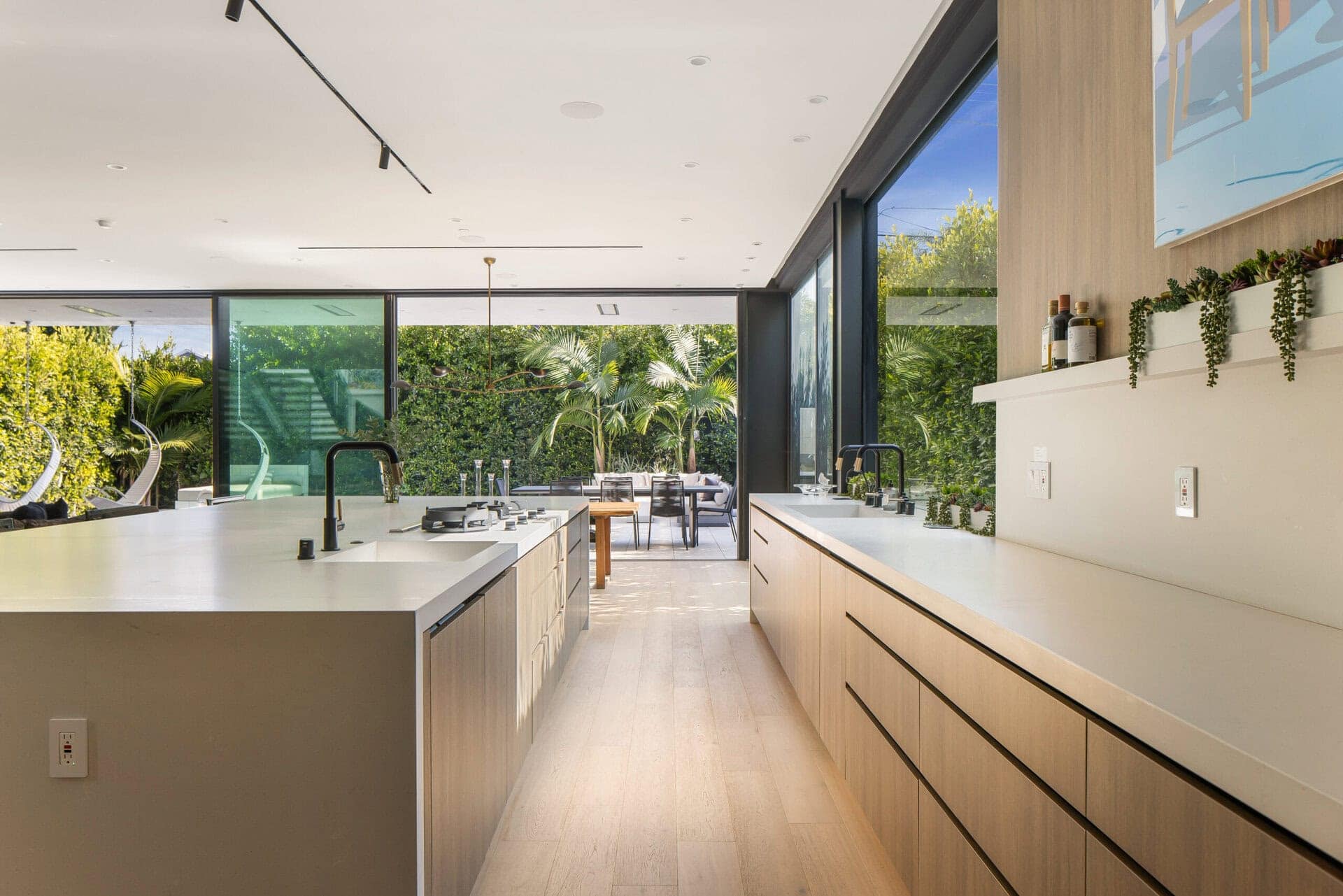
For many homeowners, there comes a moment when the house stops fitting the way they live.
Maybe the kitchen feels disconnected from the rest of the home. Perhaps the bedrooms are too small, the floor plan feels dated, or the house simply isn’t functioning the way it once did. Children grow up, work habits change, and what felt right ten years ago may no longer feel right today.
The question that follows is often the same:
Should we renovate, rebuild, or move?
It’s a significant decision, and one that has become increasingly complicated as construction costs, interest rates, and housing prices have evolved over the last several years.
While every property is different, there are a few principles that can help homeowners determine which path makes the most sense.
When Renovation Makes Sense
A renovation is often the right choice when the house already has many of the qualities that drew you to it in the first place.
The neighborhood works. The lot works. The home’s overall character feels right. The challenge is that certain spaces no longer support your lifestyle.
In these situations, a thoughtful renovation can unlock tremendous value.
Some of the most successful projects involve reimagining the flow of a home rather than dramatically increasing its size. Opening connections between living spaces, improving natural light, reorganizing circulation, and creating stronger relationships between indoor and outdoor areas can fundamentally change the way a home feels without requiring a complete rebuild.
A renovation often makes sense when:
- The existing structure is in good condition.
- The home’s orientation and placement on the lot work well.
- The floor plan needs improvement, but not replacement.
- You have a strong attachment to the neighborhood.
- The cost of improvements remains proportional to the home’s value.
The goal is not simply to add square footage. It is to make the home perform better.
When Rebuilding Makes Sense
Sometimes the limitations of a property run deeper than finishes or room layouts.
Older homes can contain structural deficiencies, inefficient floor plans, low ceiling heights, or additions that were layered on over decades without a cohesive vision. In these cases, homeowners often find themselves spending significant money trying to solve problems that originate from the building itself.
A rebuild creates the opportunity to start fresh.
It allows the design to respond directly to the site, maximize natural light, improve energy performance, and create spaces that support how a family actually lives today.
Contrary to what many people assume, rebuilding is not always dramatically more expensive than a major renovation. Once extensive structural work, foundation upgrades, seismic improvements, and systems replacements are added to an existing home, the financial gap can narrow considerably.
Rebuilding may be worth considering when:
- The existing house requires extensive structural work.
- Multiple additions have created an inefficient layout.
- Ceiling heights, room sizes, or building systems are significantly outdated.
- Renovation costs begin approaching the cost of new construction.
- Long-term value is an important consideration.
The decision should not be driven solely by square footage. It should be driven by whether the existing house can realistically become the home you want it to be.
When Moving May Be the Better Option
Not every problem can be solved through architecture.
Sometimes the issue is not the house at all.
It may be the neighborhood, commute, school district, lot size, topography, or other factors that cannot be changed through design.
We’ve occasionally advised clients that the smartest investment may not be a renovation or rebuild. It may be finding a property that is better aligned with their long-term goals.
This can be a difficult conclusion to reach, particularly when there is a strong emotional connection to a home. However, architecture is ultimately about solving problems. Occasionally, the best solution lies beyond the property itself.
The Impact of Construction Costs
One of the most common questions we hear today is whether rising construction costs should delay a project.
The answer depends less on where costs are headed and more on whether the project is fundamentally sound.
Construction costs have increased significantly over the past several years. Labor, materials, permitting, insurance, and regulatory requirements have all contributed to higher project budgets.
The response, however, is rarely to stop building.
The response is to build smarter.
The most successful projects are not necessarily the largest. They are the projects where priorities are clearly understood from the beginning.
A well-designed home often delivers more value than a larger home. Thoughtful planning, efficient layouts, strategic use of space, and careful allocation of resources can create a better result without simply increasing the budget.
Good design is not about spending more money.
It is about spending money intentionally.
Start With Questions, Not Plans
Many homeowners begin by collecting images, sketching ideas, or thinking about specific rooms they would like to add.
Those conversations are important, but they should not be the starting point.
The most productive projects begin with a different set of questions:
- What is working about the house today?
- What is not working?
- What do you hope your home will do differently five or ten years from now?
- What is a realistic investment level?
- What constraints does the property create?
- What opportunities does the site offer?
Once those questions are answered, the right path often becomes much clearer.
Making the Right Decision
There is no universal answer to whether a homeowner should renovate, rebuild, or move.
Every property, family, and budget is different.
What remains consistent is the value of understanding the options before committing to a direction.
The best projects are rarely the result of rushing toward a solution. They emerge from a clear understanding of goals, constraints, and possibilities.
Before investing in construction, it is worth investing in clarity.
Because the most expensive mistake is not choosing the wrong countertop or flooring material.
It is choosing the wrong path altogether.