



Why Some Houses Feel Better Than Others
I occasionally have the opportunity to visit houses years after they are completed.
Not for a photoshoot. Not for an award submission. Usually for something much less formal. A renovation. A guest house. A pool. Sometimes simply a conversation with a client I haven’t seen in a while.
What I enjoy most about those visits is discovering which parts of the house became important.
The answer is almost never what anyone expected during design.
Nobody walks me over to admire the kitchen island.
Nobody talks about the dimensions of the primary closet.
Nobody remembers the weeks spent debating whether a hallway should be four feet wide or five.
Instead, they show me where they drink coffee in the morning.
They point to the chair that somehow became everyone’s favorite place to sit.
They tell me the kids always ended up doing homework at one end of the dining table despite the fact that an entire study was designed for exactly that purpose.
The stories are rarely about rooms.
They’re about life.
Over time I’ve come to believe that the houses people love most share a common trait. They aren’t necessarily larger. They aren’t necessarily more expensive. And they aren’t always architecturally ambitious.
They simply feel better to live in.
The reason, I suspect, is that great houses are not really collections of rooms. They are collections of relationships.
That may sound abstract, but it influences nearly every decision we make as architects.
Take a kitchen. Most homeowners naturally focus on the kitchen itself. How large should it be? How much storage is enough? How big should the island be?
Those are important questions, but they are rarely the questions that determine whether the kitchen succeeds.
What matters is its relationship to the rest of the house.
Can someone prepare dinner while remaining connected to family and guests? Is there a visual connection to the backyard? Does the room feel like part of daily life or does it operate as a separate zone? Is there a comfortable place to sit with a cup of coffee when the house is otherwise quiet?
The kitchen may be the room, but the architecture exists in the relationships around it.
The same can be said for almost every part of a house.
A hallway is not simply a means of getting from one room to another. It can create anticipation, frame a view, or provide a gradual transition from public spaces to private ones.
A patio is not simply outdoor square footage. It is the point where the house meets the landscape.
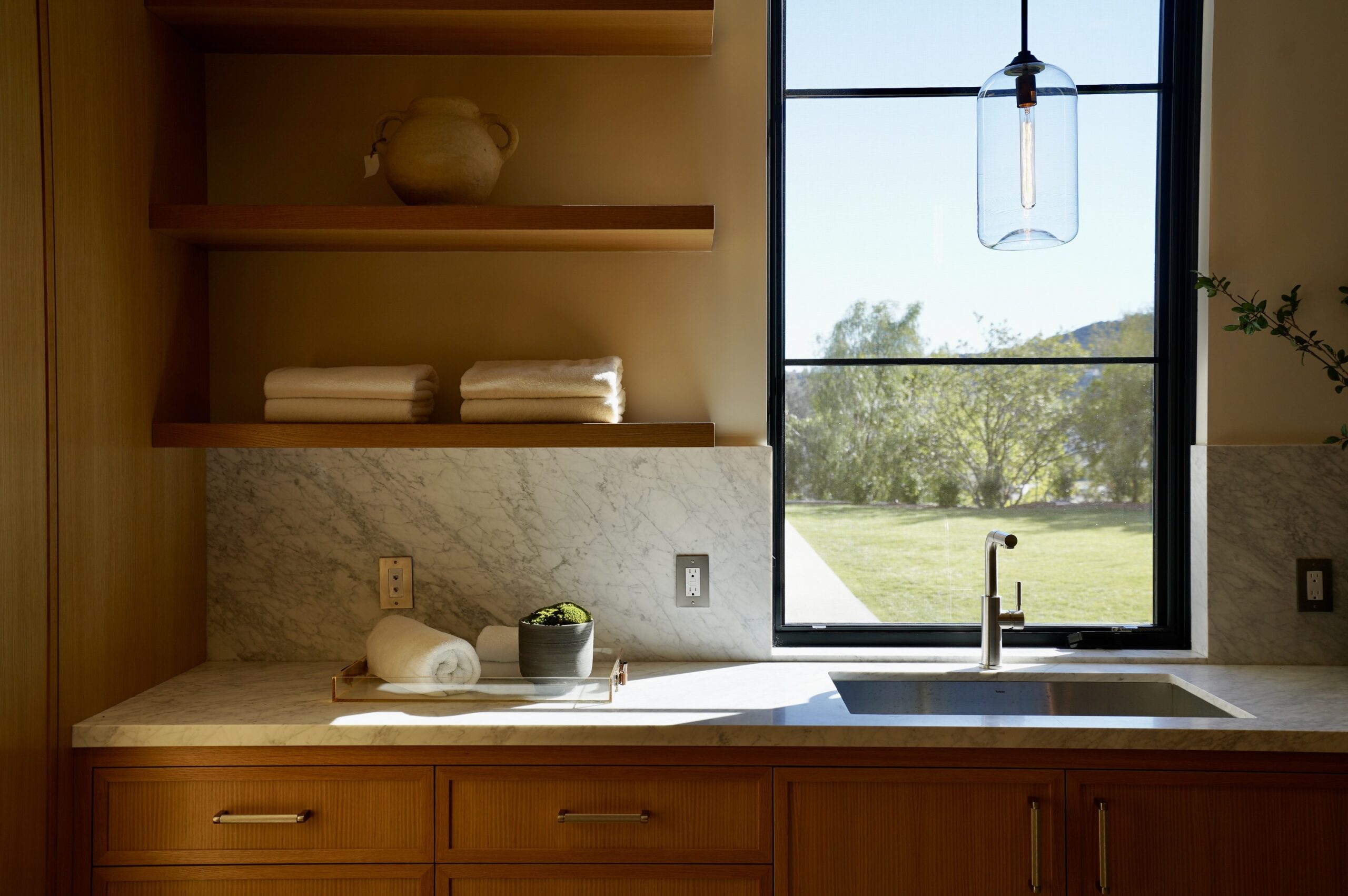
A window is not merely a source of daylight. It establishes a relationship with a tree, a garden, a distant hillside, or the changing weather.
The longer I practice, the less interested I become in rooms as individual objects. What interests me is how they work together.
Some of the most expensive houses I’ve visited have felt surprisingly disconnected. The materials were beautiful. The craftsmanship was exceptional. Every room had been carefully considered. Yet moving through the house felt awkward, as though each space had been designed independently of the next.
Conversely, I’ve walked through relatively modest houses that felt effortless. Nothing was oversized. Nothing was trying to impress. But there was a coherence to the experience. The house understood how people wanted to live.
That quality is difficult to capture in a photograph.
It’s difficult to explain with square footage.
And it’s nearly impossible to communicate in a real estate listing.
You feel it instead.
You feel it when guests instinctively know where to gather.
You feel it when indoor and outdoor spaces feel inseparable.
You feel it when family members can be together without feeling crowded and apart without feeling isolated.
You feel it when daily routines happen naturally, without friction.
Most people assume architecture is about creating beautiful spaces. Beauty matters, of course. But beauty alone is rarely enough. The houses people love most tend to offer something deeper. They support daily life so naturally that the architecture almost disappears.
Years after construction is complete, people rarely remember the dimensions of a room.
They remember where they gathered.
Where they watched their children grow up.
Where they drank coffee every morning.
Where conversations lingered long after dinner ended.
In other words, they remember relationships.
And perhaps that’s why some houses feel better than others.