



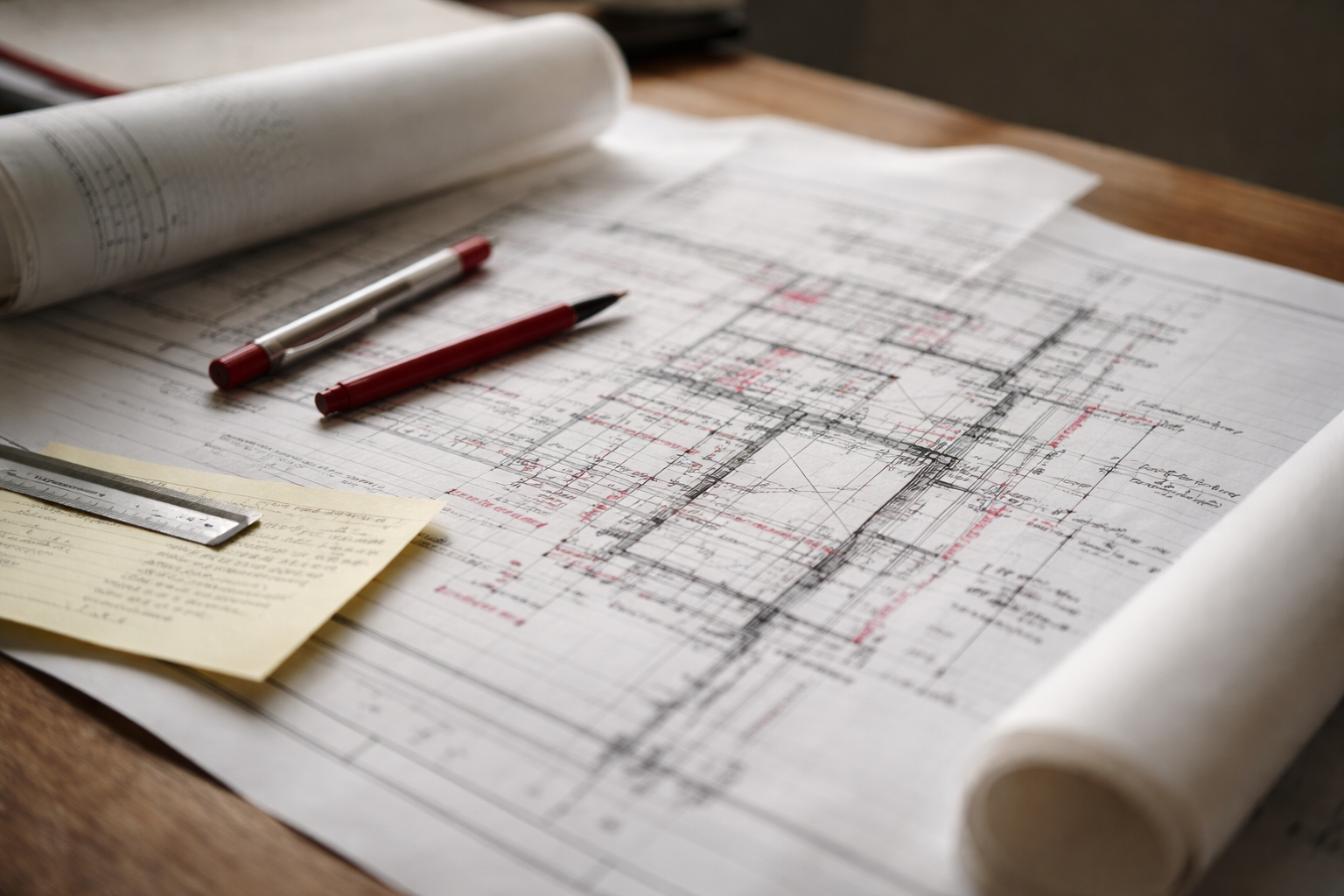
Architecture Is the Easy Part
Most people assume architectural projects live or die on design. Floor plans. Massing. Materials. A compelling image that makes everything feel possible.
In reality, design is rarely the hard part.
The hard part is everything wrapped around it. Approvals. Interpretation. Timing. Strategy. Knowing when to push and when to slow down. Understanding how a project actually moves from idea to permit to construction without losing momentum or blowing past the budget.
Good architecture matters. But it is only effective if the project can move forward.
The Myth of a Linear Process
Many clients come into a project expecting a clean sequence. Concept. Drawings. Permits. Build.
Los Angeles does not work that way.
Projects move in loops. They stall. They get reinterpreted midstream. They are shaped as much by policy, reviewers, and jurisdictional nuance as they are by program or aesthetics. The difference between a project that advances and one that drifts is rarely talent. It is clarity and strategy from the start.
When that strategy is missing, even strong design can work against you.
What Actually Controls Timing
Approvals are not governed by a single rulebook. They are shaped by interpretation and sequencing.
A few things that quietly control how long a project takes:
- How zoning is interpreted, not just what the code says
- Which agency is involved and when they enter the process
- The assigned plan checker and their expectations
- Whether consultants are aligned early or reacting late
- How much is being designed before constraints are resolved
Two projects with identical square footage can have completely different timelines depending on how these variables are handled.
This is why projects that look straightforward on paper can stall for months, while others move surprisingly efficiently.
Where Projects Really Break Down
Most stalled projects fail in predictable ways.
Design moves faster than entitlement logic.
Clients optimize layouts before the envelope is confirmed.
Consultants are brought in after decisions are already locked.
Zoning issues are discovered late, not early.
None of this feels dramatic in the moment. It feels incremental. A small adjustment here. A minor clarification there. But over time, these moments compound. Momentum slows. Confidence erodes. The project starts to feel heavier than it should.
By the time a client says “we are close,” the project is often already off course.
Why Drawings Alone Are Not Enough
Architectural drawings are powerful. They communicate intent, ambition, and care. But drawings do not negotiate with agencies. They do not anticipate discretionary review. They do not sequence consultants or anticipate interpretation.
A beautiful set without a regulatory strategy is just a proposal.
What moves a project forward is alignment. Alignment between design and zoning. Between client expectations and approval reality. Between ambition and what can be approved today, not hypothetically later.
This is where experience matters most.
Our Position
At Bittoni Architects, we treat architecture as a strategic act first and a formal one second.
That does not mean compromising design. It means protecting it.
We spend time early understanding what the project actually needs to succeed. We study the regulatory environment before committing to form. We identify where flexibility exists and where it does not. We design with the reviewer in mind without designing for the reviewer.
This approach reduces surprises. It shortens cycles. It allows the design to evolve with confidence rather than reaction.
It is quieter work. But it is the work that keeps projects moving.
When to Push and When Not To
One of the least discussed skills in architecture is judgment.
Not every issue needs to be challenged. Not every comment needs to be absorbed. Knowing when to push and when to adjust is the difference between progress and friction.
Pushing at the wrong moment can stall a project for months. Failing to push when it matters can dilute the design permanently.
That judgment is not theoretical. It comes from being in the process repeatedly and understanding how decisions land on the other side of the counter.
Who This Approach Is For
This way of working is not for everyone.
It works best for clients who want clarity early, not reassurance late. For those who understand that speed comes from alignment, not shortcuts. For projects where ambition needs structure, not just enthusiasm.
It is not ideal for clients who want to solve regulatory questions after the design is finished. Or for projects where the goal is simply to maximize square footage without regard to context or consequence.
Both approaches exist. We are explicit about which one we practice.
The Payoff
When strategy leads, projects feel different.
Meetings are more productive. Decisions are grounded. Design discussions stay focused on what matters rather than what must be undone. Budgets hold. Timelines feel intentional rather than reactive.
The work still requires patience. Los Angeles is still complex. But complexity becomes navigable.
A Final Thought
Architecture is not just about what gets built. It is about what gets approved, funded, and realized without losing its integrity along the way.
The irony is that when the hard parts are handled well, design feels easy. Not because it is simple, but because it is protected.
That is when architecture can do its real work.